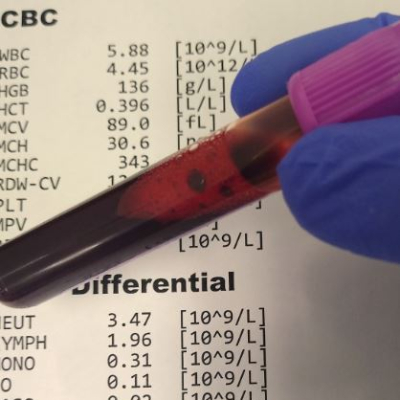
Overview
The complete blood count (CBC) is a group of tests that evaluate the cells that circulate in blood, including red blood cells (RBCs), white blood cells (WBCs), and platelets (PLTs). The CBC can evaluate your overall health and detect a variety of diseases and conditions, such as infections, anemia and leukemia.Blood cells are produced and mature primarily in the bone marrow and, under normal circumstances, are released into the bloodstream as needed.A complete blood count is a commonly performed blood test that is often included as part of a routine checkup. Complete blood counts can be used to help detect a variety of disorders including infections, anemia, diseases of the immune system, and blood cancers.The test is often ordered on healthy people as part of a medical examination and can be used to help monitor or diagnose various health conditions. Conditions such as anemia and thrombocytopenia can be diagnosed from abnormal results on the complete blood count. Certain results can indicate a need for urgent medical treatment, such as a blood transfusion if the hemoglobin is very low.
What is cbc with differential
A measure of the number of red blood cells, white blood cells, and platelets in the blood, including the different types of white blood cells (neutrophils, lymphocytes, monocytes, basophils, and eosinophils). The amount of hemoglobin (substance in the blood that carries oxygen) and the hematocrit (the amount of whole blood that is made up of red blood cells) are also measured. A CBC with differential is used to help diagnose and monitor many different conditions, including anemia and infection. Also called blood cell count with differential.
A complete blood count or CBC is a blood test that measures many different parts and features of your blood, including:
Red blood cells, which carry oxygen from your lungs to the rest of your body
White blood cells, which fight infection. There are five major types of white blood cells. A CBC test measures the total number of white cells in your blood. A test called a CBC with differential also measures the number of each type of these white blood cells
Platelets, which help your blood to clot and stop bleeding
Hemoglobin, a protein in red blood cells that carries oxygen from your lungs and to the rest of your body
Hematocrit, a measurement of how much of your blood is made up of red blood
What do the results mean?
A CBC counts the cells and measures the levels of different substances in your blood. There are many reasons your levels may fall outside the normal range. For instance:
Abnormal red blood cell, hemoglobin, or hematocrit levels may indicate anemia, iron deficiency, or heart disease
Low white cell count may indicate an autoimmune disorder, bone marrow disorder, or cancer
High white cell count may indicate an infection or reaction to medication
If any of your levels are abnormal, it does not necessarily indicate a medical problem needing treatment. Diet, activity level, medications, a women's menstrual cycle, and other considerations can affect the results. Talk to your health care provider to learn what your results mean.Looking for a cbc near me?.. Tuhealthy App will hep you find the labs for blood draws.