Overview
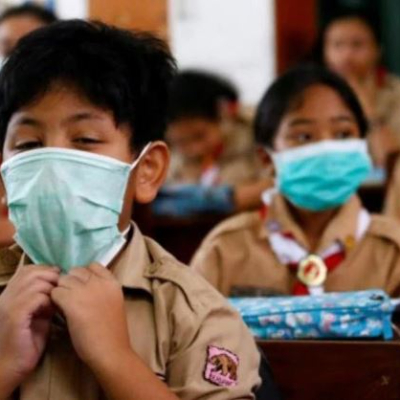
World today is facing the biggest public health risk which is leading to one of the largest and the quickest reorganization of the world order. By the end of March 2020, the epidemic had spread to over 185 countries and resulted in the closure of over 90 percent of all schools, colleges and universities impacting close to 1.38 billion students.Widespread job and income loss along with economic insecurity among families is likely to also increase child labour, sexual exploitation, teen pregnancies among other woes. While the entire world is currently in lockdown because of the COVID-19 pandemic, businesses have adapted (with varying levels of success) to work-from-home (WFH) policies. But what’s the situation in the education sector? More than 91 percent of the world’s students are out of school, due to school closures in at least 188 countries. The education sector is facing unprecedented challenges and needs to adapt and find solutions to keep children motivated and in their route to learning.
Inequality among children has been brought into sharp focus
School-going children are, naturally, the worst affected education sector stakeholders. For pupils, the lockdown doesn’t just mean reduced cashflow or a professional setback: it represents an interruption to their learning journey. And in the case of dropouts, it was the final straw for at-risk children who struggled to get an education at the best of times. The lockdown has aggravated deep-set class and social differences especially between private and public school systems. This implies that access to food, much less access to education is a key driving force behind school enrolment. These students almost certainly do not have access to remote and digital learning facilities at home. What this means is that, for millions of Indian students, the lockdown has brought all education to a complete halt.
Impacts on education: Schools
Going to school is the best public policy tool available to raise skills. While school time can be fun and can raise social skills and social awareness, from an economic point of view the primary point of being in school is that it increases a child’s ability. Even a relatively short time in school does this; even a relatively short period of missed school will have consequences for skill growth. But can we estimate how much the COVID-19 interruption will affect learning? Not very precisely, as we are in a new world; but we can use other studies to get an order of magnitude.
The closure of schools, colleges and universities not only interrupts the teaching for students around the world; the closure also coincides with a key assessment period and many exams have been postponed or cancelled.Internal assessments are perhaps thought to be less important and many have been simply cancelled. But their point is to give information about the child’s progress for families and teachers. The loss of this information delays the recognition of both high potential and learning difficulties and can have harmful long-term consequences for the child. Andersen and Nielsen (2019) look at the consequence of a major IT crash in the testing system in Denmark. As a result of this, some children could not take the test. The authors find that participating in the test increased the score in a reading test two years later by 9% of a standard deviation , with similar effects in mathematics. These effects are largest for children from disadvantaged backgrounds.
Looking for a lab testing near?. You can reach Tuhealthy for cost effective online lab testing. We will hep you to find laboratory near you. Your personal Labs may be part of our network. Please check our provider list for details.