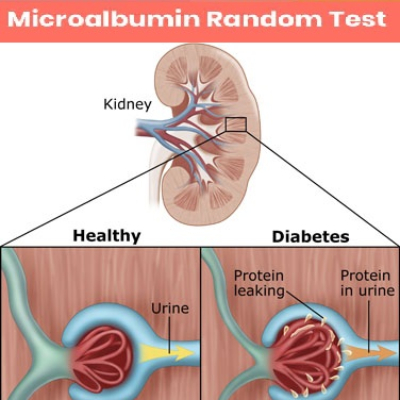
What is albuminuria?
Albumin is a type of protein that is normally found in the blood. Your body needs protein. It is an important nutrient that helps build muscle, repair tissue, and fight infection. But it should be in your blood, not your urine. When you have albumin (protein) in your urine, it is called “albuminuria” or “proteinuria.” .One of the main jobs of your kidneys is to filter your blood. Your kidneys keep important things your body needs inside your blood, like protein. They also remove things your body doesn’t need, like waste products and extra water. If kidneys are healthy, you should have very little protein in your urine – or even none. But if your kidneys are damaged, protein can “leak” out of the kidneys into your urine. Albuminuria may be an early sign of kidney disease, but your doctor will check you again to make sure albuminuria is not caused by something else, like not drinking enough water. If your doctor suspects that you have kidney disease, the test for albumin will be repeated.
What Is a Microalbumin Urine Test?
A microalbumin urine test checks for small (or "micro") amounts of albumin in your urine -- at levels so small a regular urine test might not find them. It can be a sign of kidney disease.This test is used to detect and monitor renal disease in patients with diabetes mellitus and hypertension, and other patients at risk for or with renal disease including women with preeclampsia and patients with systemic lupus erythematosis (SLE).Gross proteinuria may be detected using urine dipsticks and direct testing. The immunoturbidimetric assay for urinary albumin excretion is more sensitive and enables earlier detection of renal impairment.Albumin, Timed Urine Microalbumin is albumin excreted in the urine and is a sensitive marker of nephropathy. It is used to screen for early renal disease in diabetic patients.Looking for comp metabolic panel 14 test?. Use Tuhealthy for labs tsh test.
What Happens During the Test?
To check for albumin, you need to provide a urine sample. Your doctor may ask you to do this in one of a few ways:
Random test. You go to your doctor’s office. They’ll send you to a restroom and give you directions to pee into a cup. Your doctor will most likely ask the lab to check for creatinine as well as albumin. Creatinine is a normal waste product in your urine. When you measure both numbers, you get a clearer picture of what’s happening. You usually get results in 24 to 72 hours, but it depends on your lab.
Timed test. For a short test, 2 hours, you’ll probably stay at the doctor’s office or lab.
12- or 24-hour test. The doctor will give you a special container. You’ll pee into it over 24 hours and take it back. When the 24 hours are up, go once more, add that urine, and note the time. Keep it cool until you can return it. The test looks for the same things as a random test, but gathering urine over a longer period gives the doctor a better idea of what’s in it. You should get results within a week or two.
Keep in mind that labs test things a bit differently from each other. Also, not all bodies are the same, so what’s normal for one person might not be normal for you. The numbers here are guidelines. Your doctor can help you understand what they mean.
Normal: less than 30 micrograms (mcg) per milligram (mg) of creatinine
Microalbuminuria: 300 mcg per mg of creatinine
Clinical albuminuria: More than 300 mcg/mg creatinine