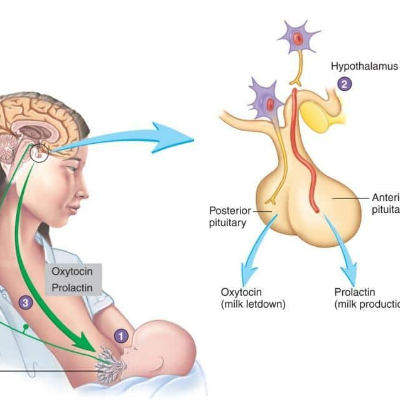
What is Prolactin
Prolactin, also known as lactotropin, is a protein best known for its role in enabling mammals, usually females, to produce milk. It is influential in over 300 separate processes in various vertebrates, including humans.Prolactin is a hormone produced by your pituitary gland which sits at the bottom of the brain.If prolactin levels are higher than normal, it often means there is a type of tumor of the pituitary gland, known as a prolactinoma. This tumor makes the gland produce too much prolactin. Excess prolactin can cause the production of breast milk in men and in women who are not pregnant or breastfeeding. In women, too much prolactin can also cause menstrual problems and infertility (the inability to get pregnant). In men, it can lead to lower sex drive and erectile dysfunction (ED). Also known as impotence, ED is the inability to get or maintain an erection.Prolactin is a hormone named originally after its function to promote milk production (lactation) in mammals in response to the suckling of young after birth. It has since been shown to have more than 300 functions in the body. These can be divided into a number of areas: reproductive, metabolic, regulation of fluids (osmoregulation), regulation of the immune system (immunoregulation) and behavioural functions.In humans, prolactin is produced both in the front portion of the pituitary gland (anterior pituitary gland) and in a range of sites elsewhere in the body. Lactotroph cells in the pituitary gland produce prolactin, where it is stored and then released into the bloodstream. Human prolactin is also produced in the uterus, immune cells, brain, breasts, prostate, skin and adipose tissue.
Problems Possible with Prolactin Production
For most people, prolactin does its job without a problem, and few are aware of the impact it has on their health. Yet some people can struggle with prolactin levels, which can cause a variety of problems.Too much prolactin in the blood causes hyperprolactinemia, a condition that can lead to menstrual disturbances, estrogen deficiency and testosterone deficiency. High prolactin levels also can cause unwanted lactation. This often occurs during pregnancy or when the thyroid is not functioning properly. Pituitary tumors, known as prolactinomas, and medications that reduce dopamine can also lead to increased prolactin levels. High levels of prolactin are linked to sexual problems. Some of these conditions can be treated with medications that mimic the action of dopamine.It's also possible to have too little prolactin, a condition known as hypoprolactinaemia. This is extremely rare, but it can occur if people have under-active pituitary glands. This is commonly noticed in women after pregnancy who are not able to produce sufficient milk. No other proven health effects of low prolactin levels have been noted. Research is underway to determine if those with low prolactin levels suffer from a reduction in immune system responses.
Prolactin test
A prolactin (PRL) test measures how much of a hormone called prolactin you have in your blood. When women are pregnant or have just given birth, their prolactin levels increase so they can make breast milk. But it’s possible to have high prolactin levels if you’re not pregnant, and even if you’re a man.Your doctor may order a prolactin test when you report having symptoms. For women Irregular or no periods,Infertility,Breast milk discharge when you’re not pregnant or nursing,Tenderness in your breast or Menopausal symptoms such as hot flashes and vaginal dryness. For men Decreased sex drive,Difficulty in getting an erection,Breast tenderness or enlargement or Breast milk production (very rare). And for both gender have Unexplained headaches and Vision problems.Prolactin Test will perform during pregnancy and postpartum lactation, serum prolactin can increase 10- to 20-fold. Exercise, stress, and sleep also cause transient increases in prolactin levels. Consistently elevated serum prolactin levels (>30 ng/mL), in the absence of pregnancy and postpartum lactation, are indicative of hyperprolactinemia. Hypersecretion of prolactin can be caused by pituitary adenomas, hypothalamic disease, breast or chest wall stimulation, renal failure or hypothyroidism. A number of drugs, including many antidepressants, are also common causes of abnormally elevated prolactin levels. Hyperprolactinemia often results in galactorrhea, amenorrhea, and infertility in females, and in impotence and hypogonadism in males. Renal failure, hypothyroidism, and prolactin-secreting pituitary adenomas are also common causes of abnormally elevated prolactin levels.Looking for lab diagnostics near me?. Use Tuhealthy app for g i map test.