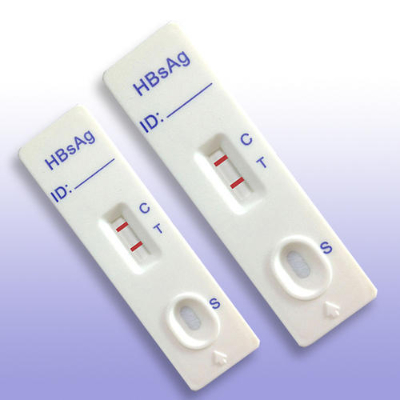
What is Hepatitis B
Hepatitis B is a potentially life-threatening liver infection caused by the hepatitis B virus (HBV). It is a major global health problem. It can cause chronic infection and puts people at high risk of death from cirrhosis and liver cancer.A safe and effective vaccine that offers a 98-100% protection against hepatitis B is available. Preventing hepatitis B infection averts the development of complications including the development of chronic disease and liver cancer. An acute hepatitis B infection follows a relatively long incubation period - from 60 to 150 days with an average of 90 days. It can take up to six months, however, for a person to get rid of the hepatitis B virus. And it can take up to six months for a hepatitis B blood test to show whether as person has recovered from an acute infection or has become chronically infected
What is Hepatitis B Surface Antigen test?
This test looks for hepatitis B surface antigens in your blood. The test is used to find out whether you have a recent or long-standing infection from the hepatitis B virus (HBV).HBV has proteins called antigens on its surface that cause your immune system to make antibodies. Hepatitis B surface antigens can be found in your blood within several weeks after the infection starts. They are one of the earliest signs of a hepatitis B infection.HBV is one of 5 hepatitis viruses. The others are hepatitis A, C, D, and E. Most hepatitis infections are caused by these 5 viruses. HBV is spread through blood, seminal fluid, and vaginal secretions. It can take several months to develop symptoms of hepatitis B after you become infected. The virus causes an infection in the liver. In most cases, this virus clears up on its own within 6 months. But in a small portion of adults and a larger portion of children, the virus does not go away. This is especially true for newborns. This is called having a chronic infection. It may lead to liver cell damage; scarring, or cirrhosis; or liver cancer.Hepatitis B surface antigens are an early sign of an acute infection, and they are also present during chronic, or long-term, infection.
Hepatitis B Surface Antigen with Reflex Confirmation
Hepatitis B Surface Antigen with Reflex Confirmation - Surface antigen usually appears in the serum after an incubation period of 1 to 6 months following exposure to Hepatitis B virus and peaks shortly after onset of symptoms. It typically disappears within 1 to 3 months. Persistence of Hepatitis B surface antigen for greater than 6 months is a prognostic indicator of chronic Hepatitis B infection. When only a single test, Hepatitis B Surface Antigen, is ordered to diagnose Hepatitis B in a pregnant woman, additional tests such as liver enzymes should be ordered to confirm the diagnosis.Only one sample of blood is needed for a hepatitis B blood test, but the “Hepatitis B Panel” includes three parts. All three test results are needed to fully understand whether a person is infected or not.HBsAg (hepatitis B surface antigen) is the first serologic marker to appear in a new acute infection, which can be detected as early as 1 week and as late as 9 weeks, with an average of one month after exposure to the hepatitis B virus (HBV). HBsAg is detectable for a variable amount of time, along with the HBV DNA, though about 50% of persons will test HBsAg and HBV DNA negative 7 weeks after symptoms.All persons who spontaneously recover from an infection will test negative for HBsAg and negative for HBV DNA about 15 weeks after the appearance of symptoms.Looking for chain of custody forms?. Use Tuhealthy App for finding integrative health systems.