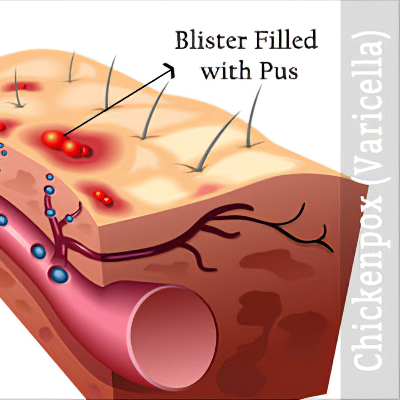
Varicella
Varicella zoster is a virus and it is one of nine herpesviruses known to infect humans. It causes chickenpox (varicella), a disease most commonly affecting children, teens, and young adults, and shingles (herpes zoster) in adults; shingles is rare in children. VZV is a worldwide pathogen known by many names: chickenpox virus, varicella virus, and zoster virus. It causes chickenpox, also called varicella and shingles, called herpes zoster.After the chickenpox runs its course, the virus retreats to nerve tissues near your spinal cord and brain, where it hides out.Varicella zoster virus (VZV) is an exclusively human virus that belongs to the a-herpesvirus family. VZV is present worldwide and is highly infectious. Primary infection leads to acute varicella or “chickenpox”, usually from exposure either through direct contact with a skin lesion or through airborne spread from respiratory droplets.After initial infection, VZV establishes lifelong latency in cranial nerve and dorsal root ganglia, and can reactivate years to decades later as herpes zoster (HZ) or “shingles”.VZV infections are species-specific to humans, but can survive in external environments for a few hours, maybe a day or two.More than 90% of adults in the United States acquired the disease in childhood, while the majority of children and young adults have been vaccinated with the live virus vaccine.
Symptoms
The itchy blister rash caused by chickenpox infection appears 10 to 21 days after exposure to the virus and usually lasts about five to 10 days. Other signs and symptoms, which may appear one to two days before the rash, include Fever, Loss of appetite and Headache.Once the chickenpox rash appears, it goes through three phases:
Raised pink or red bumps (papules), which break out over several days
Small fluid-filled blisters (vesicles) which form in about one day and then break and leak
Crusts and scabs, which cover the broken blisters and take several more days to heal
New bumps continue to appear for several days, so you may have all three stages of the rash — bumps, blisters and scabbed lesions — at the same time. You can spread the virus to other people for up to 48 hours before the rash appears, and the virus remains contagious until all broken blisters have crusted over.The disease is generally mild in healthy children. In severe cases, the rash can cover the entire body, and lesions may form in the throat, eyes, and mucous membranes of the urethra, anus and vagina.
Prevention
Chickenpox is highly contagious to people who haven't had the disease or been vaccinated against it. Today, a vaccine is available that protects children against chickenpox. Routine vaccination is recommended by the Centers for Disease Control and Prevention (CDC).The chickenpox vaccine is a safe, effective way to prevent chickenpox and its possible complications.
Varicella-Zoster Virus Antibody (IgG) - Varicella-Zoster Virus (VZV) causes chicken pox and when reactivated, potentially decades later, causes shingles. Twenty percent of adults will develop shingles, a rash or blister of the skin that may cause severe pain. Varicella-Zoster IgG, EIA reliably measures immunity due to previous infection, but is unsuitable for detection of post-vaccination immune status.Looking for a titer for chickenpox?. Tuhealthy will helps you to find varicella titer with best price.