Overview
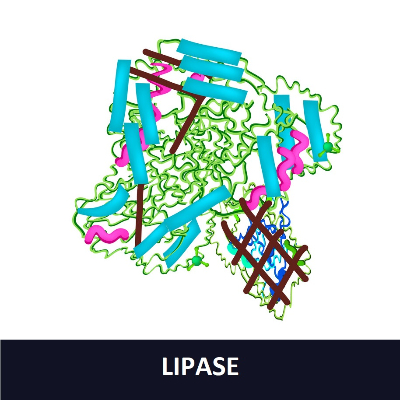
A lipase is any enzyme that catalyzes the hydrolysis of fats (lipids). Lipases are a subclass of the esterases.Lipases perform essential roles in digestion, transport and processing of dietary lipids (e.g. triglycerides, fats, oils) in most, if not all, living organisms. Genes encoding lipases are even present in certain viruses.Most lipases act at a specific position on the glycerol backbone of a lipid substrate (A1, A2 or A3)(small intestine). For example, human pancreatic lipase (HPL), which is the main enzyme that breaks down dietary fats in the human digestive system, converts triglyceride substrates found in ingested oils to monoglycerides and two fatty acids.Several other types of lipase activities exist in nature, such as phospholipases and sphingomyelinases however, these are usually treated separately from "conventional" lipases.A lipase test measures the level of a protein called lipase in your blood.Lipase helps your body absorb fats. It’s released by the pancreas, a long, flat gland between your stomach and spine.When your pancreas is inflamed or injured, it releases more lipase than usual. Your doctor may want to find out the level of this protein in your blood to find how your pancreas is doing.A lipase test may also be referred to as a serum lipase or LPS.
What is a lipase test?
Your pancreas makes an enzyme called lipase. The pancreas is a narrow, flat organ about six inches long located deep within the abdominal cavity, below the liver and between the stomach and the spine. Its head section connects to the duodenum, the first part of the small intestine. Inside the pancreas, small ducts (tubes) feed digestive enzymes produced by the pancreas into the pancreatic duct. Lipase is transported through the pancreatic duct and into the first part of the small intestine, where it helps break down dietary triglycerides (a form of fat) into fatty acids.When you eat, lipase is released into your digestive tract. Lipase helps your intestines break down the fats in the food you’re eating.Certain levels of lipase are needed to maintain normal digestive and cell function. But abnormally high levels of the enzyme in your blood can indicate a health problem. A serum lipase test measures the amount of lipase in the body. Your doctor may also order an amylase test at the same time as the lipase test. An amylase test is used to diagnose diseases of the pancreas, but is used less frequently since it can come back high due to other problems. The results from these tests are typically used to diagnose and monitor specific health conditions, including acute pancreatitis, which is a sudden swelling of the pancreas,chronic pancreatitis, which is a chronic or recurrent swelling of the pancreas,celiac disease or pancreatic cancer.
What do my results mean?
Lipase is Confirmatory evidence for diagnosis of pancreatitis.A lipase test may be used to diagnose pancreatitis or another disease of the pancreas and find out if there is a blockage in your pancreas.The results of the lipase test will vary based on the laboratory completing the analysis. According to Mayo Medical Laboratories, reference values for people ages 16 and up are 10–73 units per liter (U/L). Your doctor will explain if your results are considered normal for you.If the results of your lipase test are higher than normal, you may have a health condition that blocks the flow of lipase from your pancreas. Possible conditions include gallstones,a bowel obstruction,celiac disease,cholecystitis,an ulcer,gastroenteritis,pancreatitis or pancreatic cancer.Lipase tests that consistently show low lipase levels, or values below 10 U/L, may indicate the presence of other health conditions that can affect your pancreas. In particular, decreased levels of lipase may indicate the presence of cystic fibrosis or chronic pancreatitis.Looking for where can i get a titer test near me?.Use Tuhealthy App for chem 14.